
AES are specialists in commercial wheel alignment, find out more about our solutions here: commercial wheel alignment equipment.
AES are specialists in heat inductors, find out more about our solutions here: induction heating solutions.
From product innovations to expert industry guides, our HUB keeps you informed on the latest trends. Stay ahead with in-depth articles, technical guides, and company updates - all in one place.
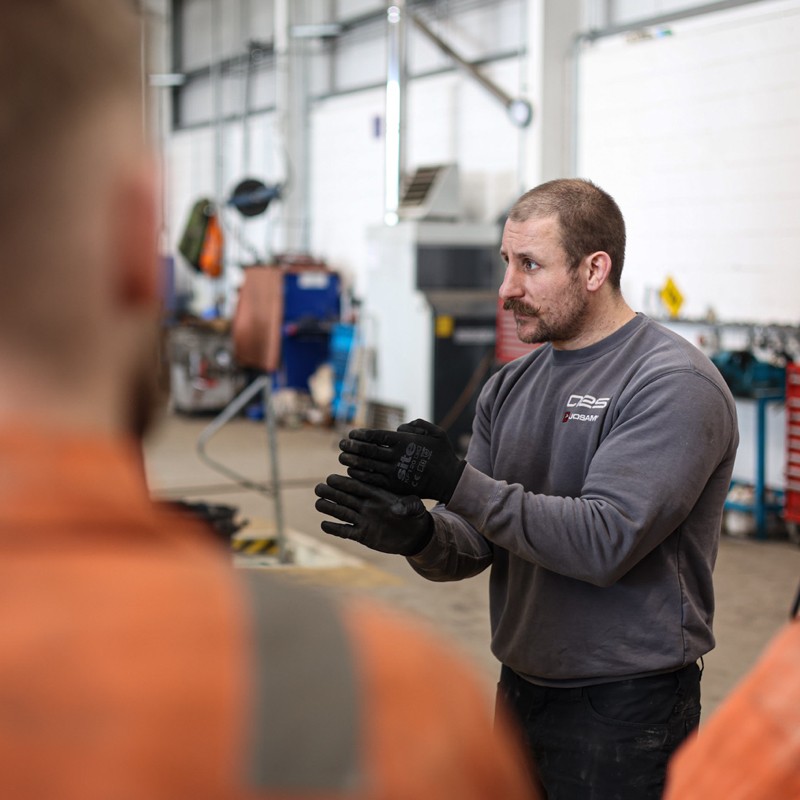
A wheel alignment case study performed by the Department for Transport, using Josam equipment, performed in the early 2000s highlighted that a 0.5° misalignment can reduce tyre life by up to 50%.
It is estimated over 50% of trailers on UK roads are out ofalignment, with fleet operators often focusing on tractor units and overlookingtrailers due to the nature of how they’re exchanged.
AES believe there are enough benefits for larger fleets toconsider corrective wheel alignment on trailers including:
- Tyres cost savings – up to 15% savings on tyrescosts with correct wheel alignment
- Fuel savings – a correctly aligned trailer canreduce the pulling force (drag) on the towing unit lowering rolling resistance
- Safety – misaligned trailers often take up moreroom on the road due to “dog-run” or “crabbing” this can create uncomfortableand unsafe handling properties for the driver
- Environment – fuel and tyre cost savings reduceyour CO2 emissions and tyre dust pollution
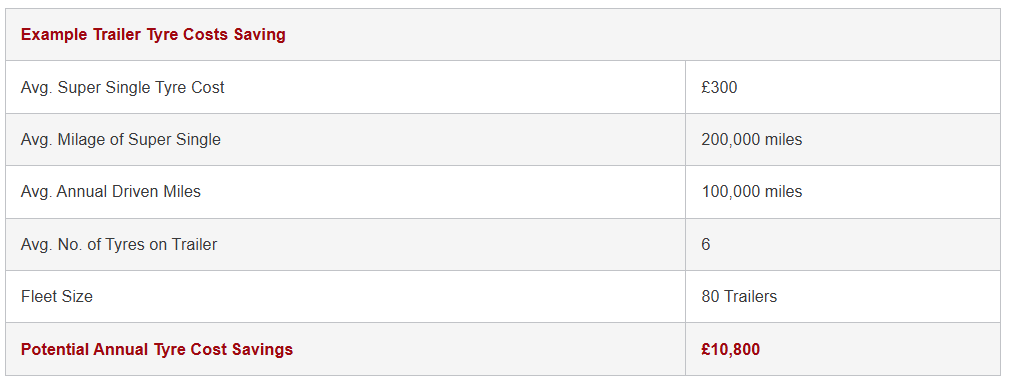
Example Tyre Cost Savings on Trailers
As an example, using data from the Department for Transportstudy AES have created an example tyre cost saving for correctly alignedtrailers vs incorrectly aligned trailers.

Bad Trailer Alignment - What to look for
Though AES recommends annual pro-active alignment checks ontrailers, some fleet operators don’t have the luxury of being able to forwhatever reason, if that is the case AES have outlined some signals that couldindicate issues with trailer alignment
- Tyres - Premature tyre wear, blow-outs anddamage to trailer tyres. Premature wear on the towing unit
- Crabbing / Dog Run – Driver complaints oreye-witnessed crabbing on a trailer
- Instability – Driver complaints of bad drivingbehaviour such as pulling or additional drag beyond the norm

Corrective Procedure
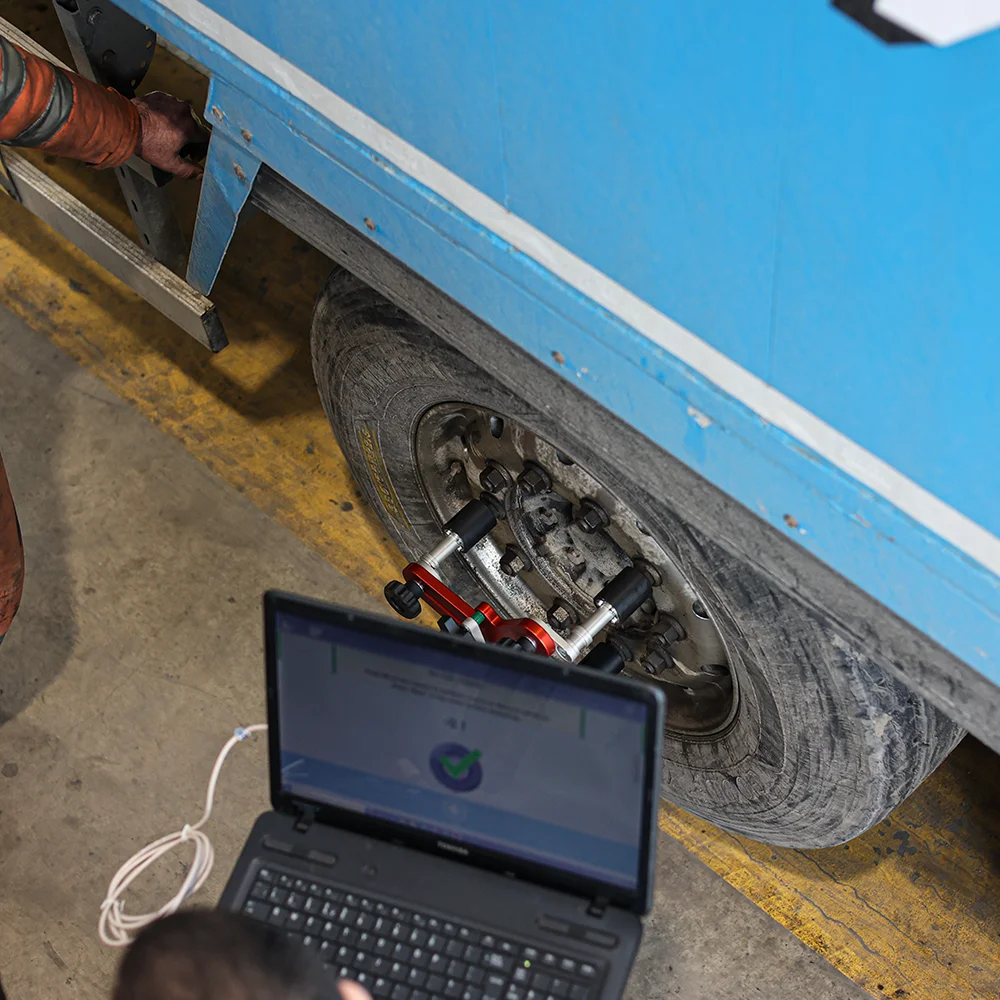
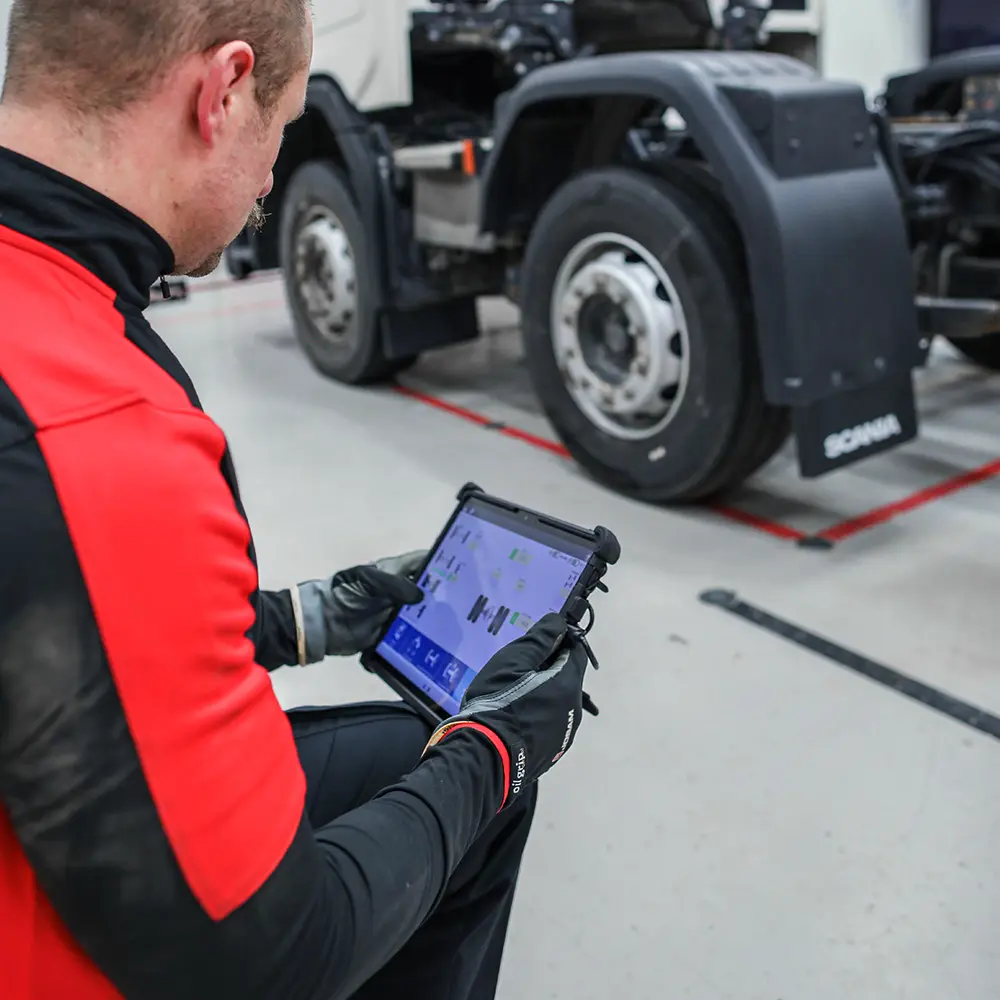
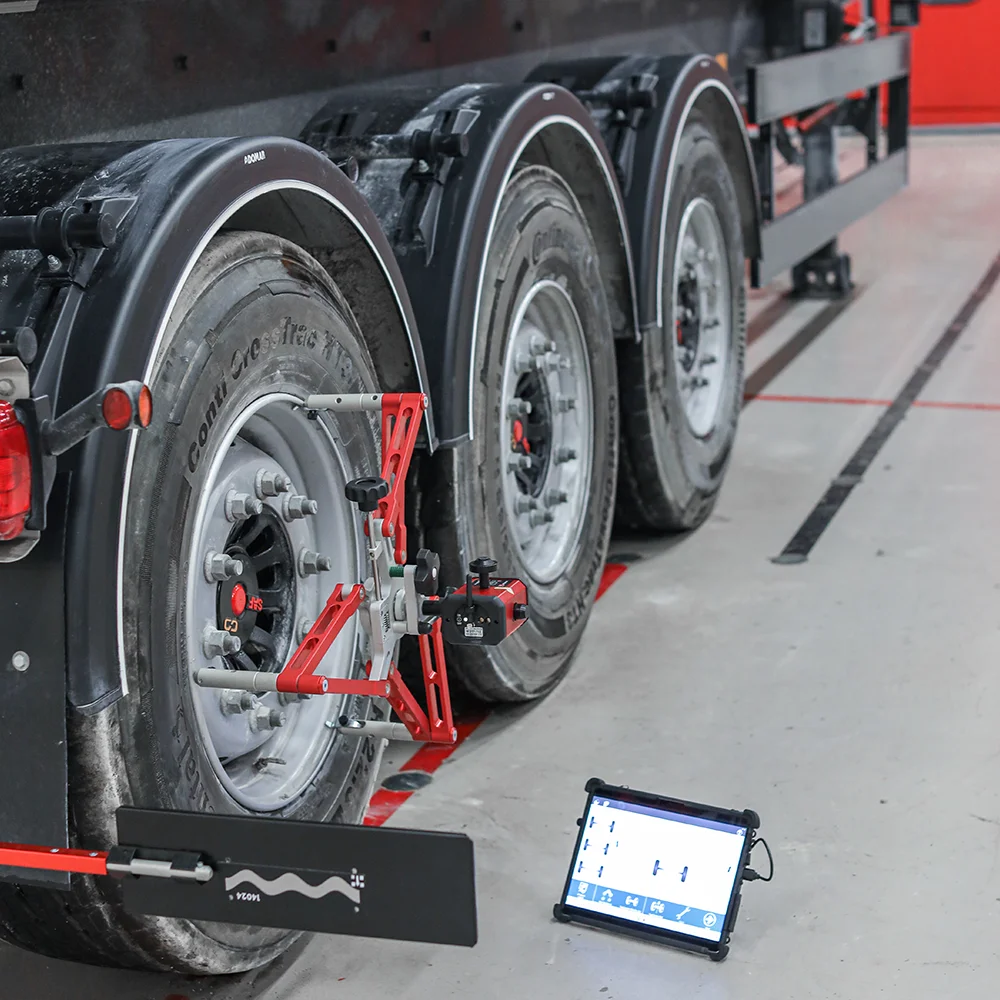
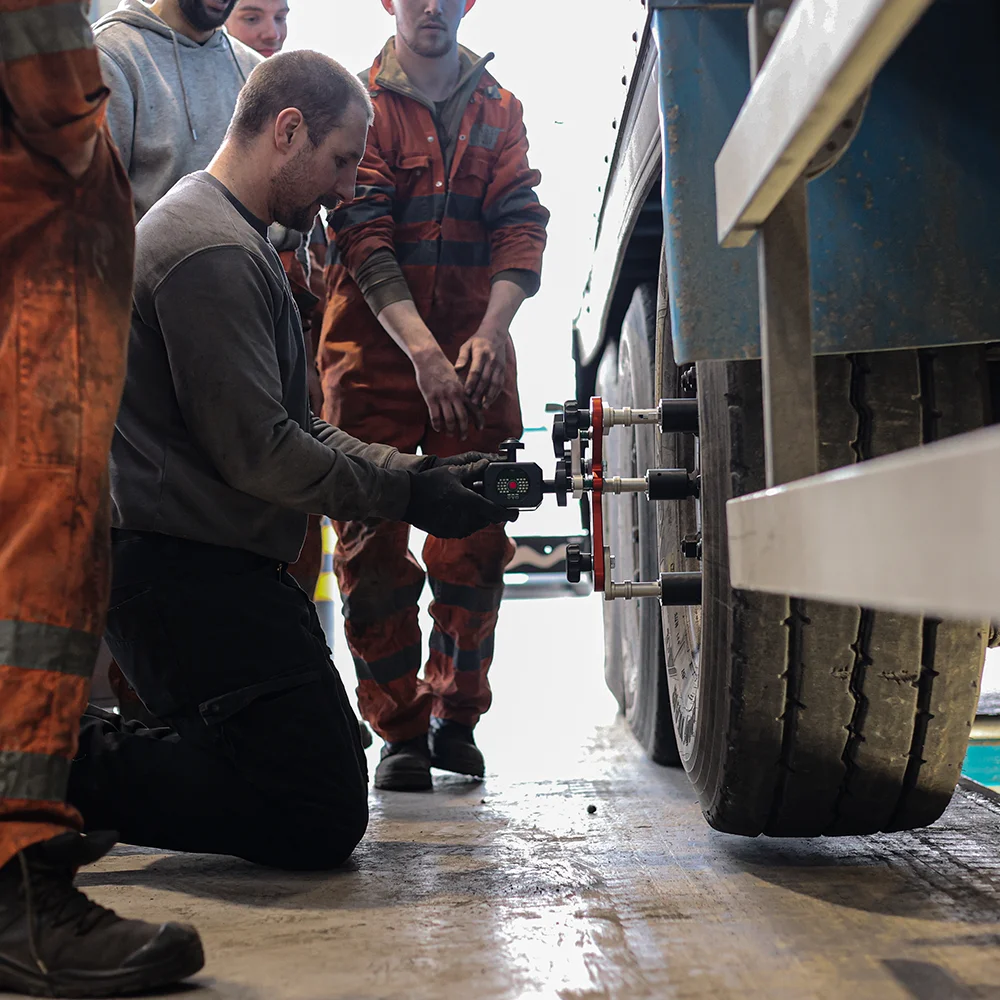
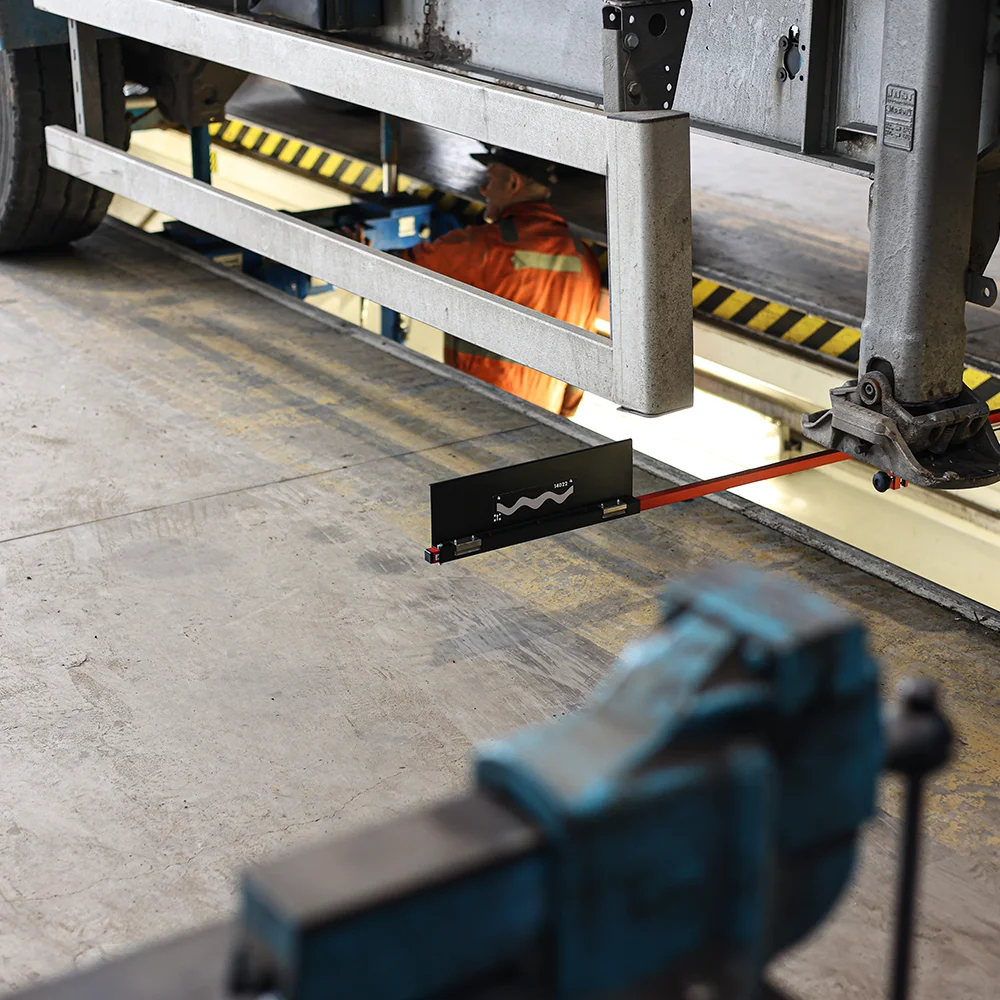
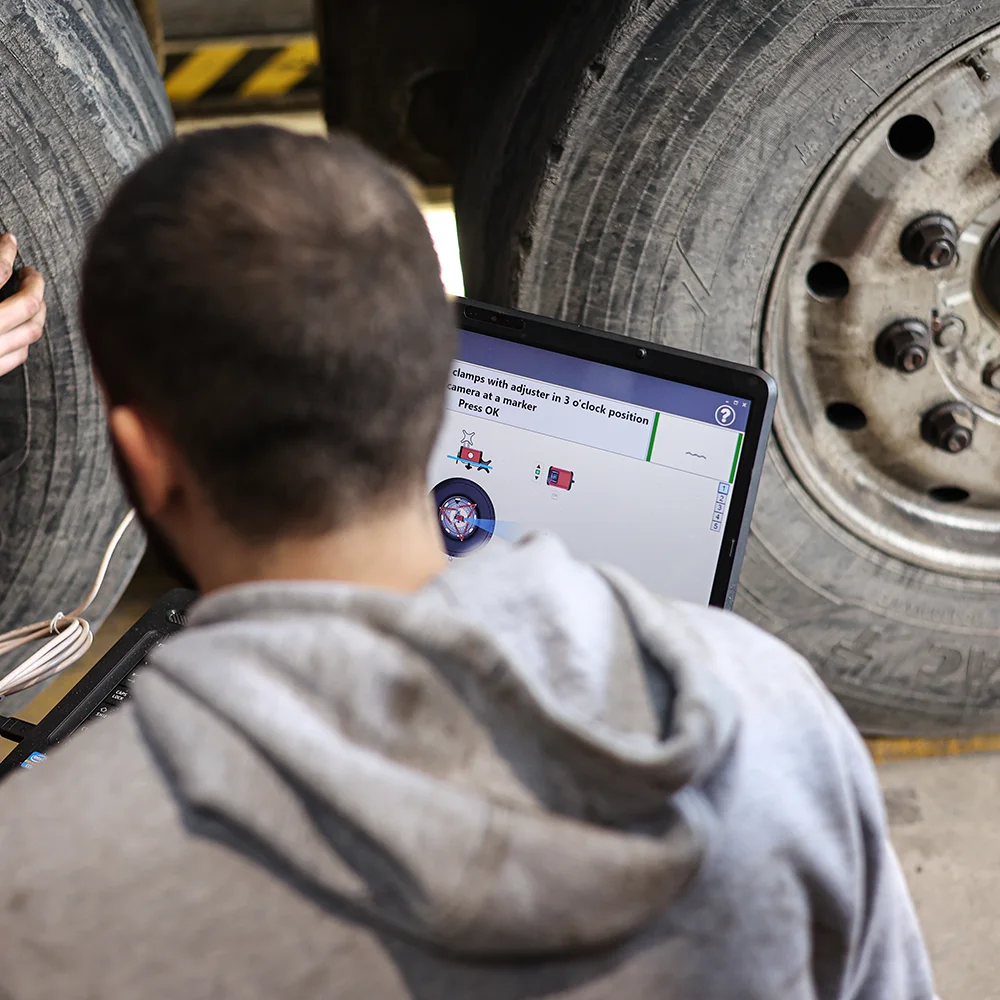
Wheel alignments on trailers can be carried out by trainedcontractors or through owned equipment, AES recommend their Josam alignmentsystems which can measure all types of trailers and provide a detailed beforeand after report within the software, which also offers a tyre managementsystem to monitor tyres alongside wheel alignments.
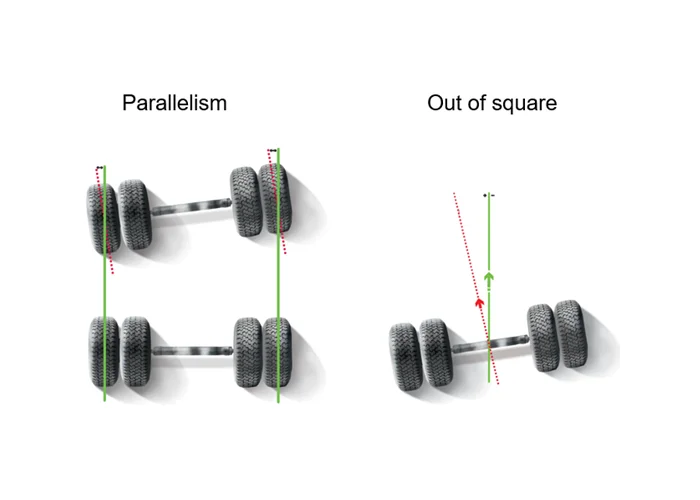
When measuring a typical trailer with 3 non-steered axles there are 2 main measurements to look for, out-of-square and parallelism. Outof square is the angle of the axle in relation to the centreline and parallelism is the angle of two or more axles in relation to each other.
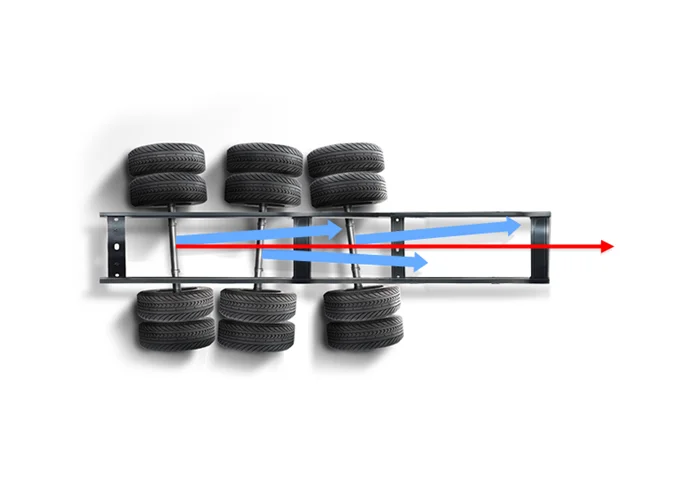
Here is an example of a 3-axle trailer with each axlehaving largely unique out-of-square axles in relation to the centreline. As you can imagine there would be increased tyre wear and drag on the towing unit.
All Axles
In this particular example, depending on the OEM tolerances, each axle would have to be adjusted to bring it within tolerance in relation tothe centreline, only adjusting 1 axle would have minimal impact.
View our full range of trailer wheel alignment equipment.